Given the choice, most older adults want to stay in their own home. Not just for sentimental reasons, though those matter. Home means familiarity, independence, community and the life they have built. Research shows again and again that staying at home with the right support tends to bring better physical and mental health than moving into residential care, especially when that move happens sooner than it needs to.
But wanting to stay in your home is not enough on its own. The home has to be safe enough to stay in.
The Centre for Ageing Better's State of Ageing 2025 report found that more than 500,000 homes in England headed by someone over 55 have serious stair fall hazards. Only 9% of homes in England meet accessibility standards. And 1.5 million households with at least one person aged 55 or over say they need an adaptation, yet only around half have had that need met.
This final issue in our Living Well in Later Life series brings together everything that came before. Falls prevention, physical strength, nutrition, brain health, social connection, sleep and medication all come to their most practical expression here: in the home, day by day, room by room.
Common home safety risks for older adults
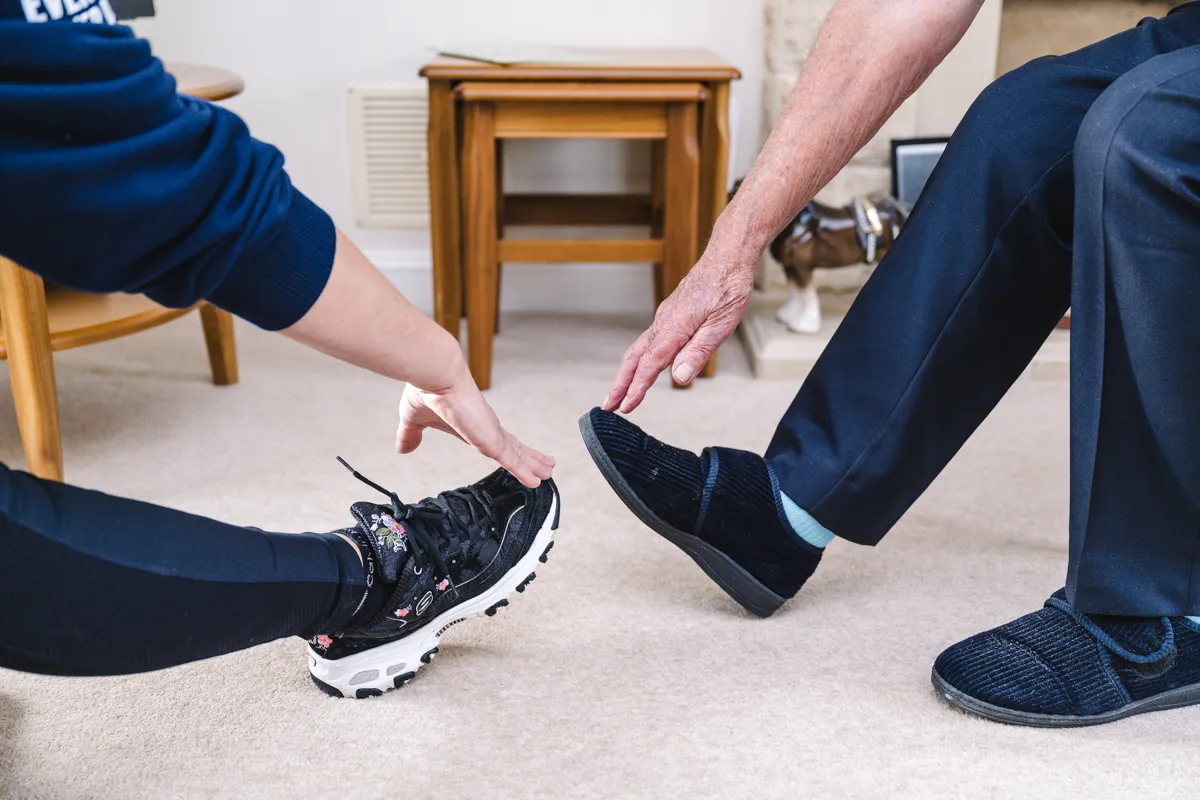
Falls are the leading cause of injury-related hospital admissions among older adults, costing the NHS more than £2.3 billion every year. One in three adults over 65 falls each year, and one in two over 80. Most of these falls happen at home, and most of those homes have hazards that can be spotted and fixed.
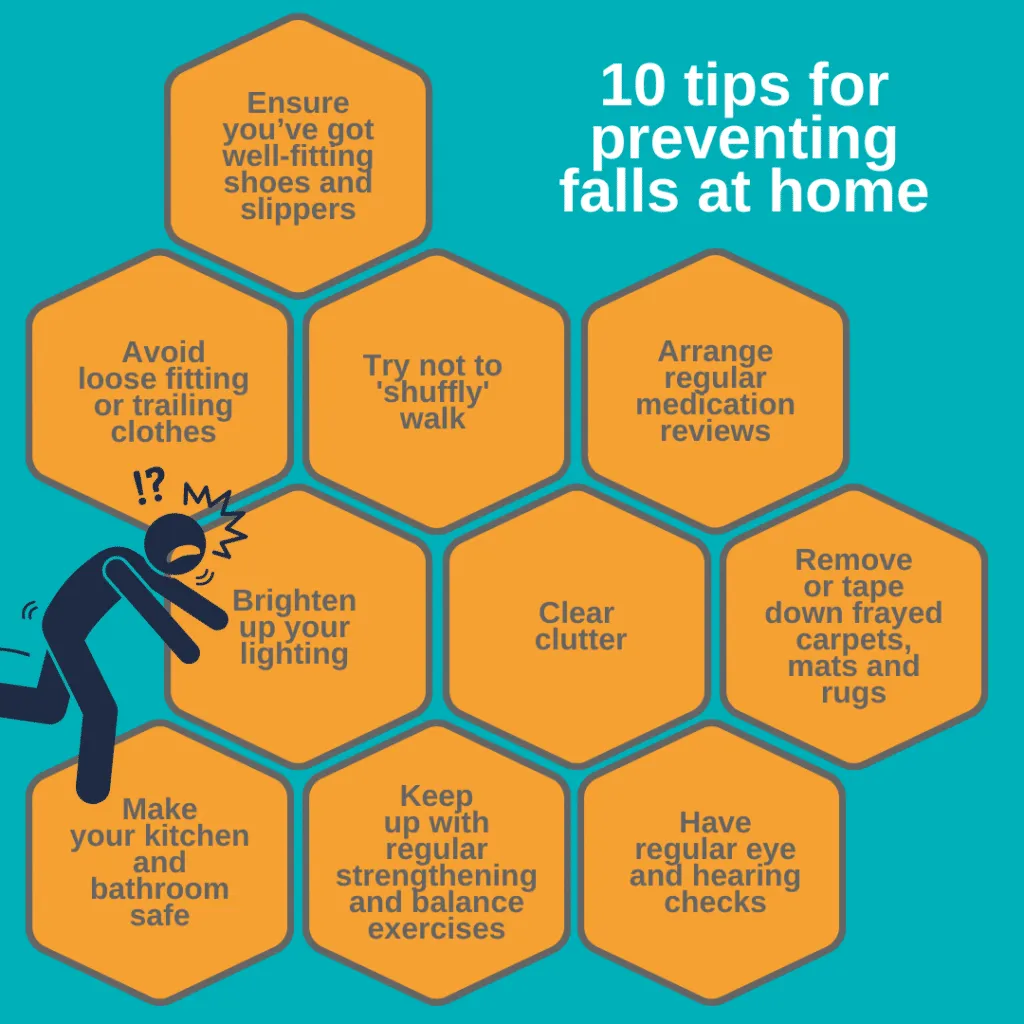
Here is an important shift in thinking: most home falls are not caused by general unsteadiness or unavoidable ageing. They happen when a specific hazard meets a specific moment. Removing the hazard is often more effective, and more achievable, than trying to stop someone ever being unsteady. Our falls prevention support works on both.
Simple home adaptations that help prevent falls
Many of the most effective home safety measures are also the most affordable. The Centre for Ageing Better found that removing stair fall hazards costs, on average, less than £1,500 per property. That cost is paid back in NHS savings within just seven months.
Here are the changes with the strongest evidence for reducing falls and supporting independent living, roughly in order of impact and affordability:
• Grab rails. The single most cost-effective change. A grab rail at the bath (£50 to £150 fitted), at the toilet and on the stairs cuts fall risk a lot. They should be professionally fitted to load-bearing wall studs. Many local councils will provide and fit these free of charge, so ask your council's adult social care team.
• Non-slip flooring and mats. Remove loose rugs; secure edges of fitted carpets that have lifted; use non-slip mats in the shower or bath (with suction pads) and on bathroom floors. These changes cost almost nothing but remove a disproportionate number of hazards.
• Motion-sensor night lights. Plug-in lights for the bedroom-to-bathroom route come on automatically when someone moves. They cost £10 to £30 and can be genuinely life-changing for those who wake often at night.
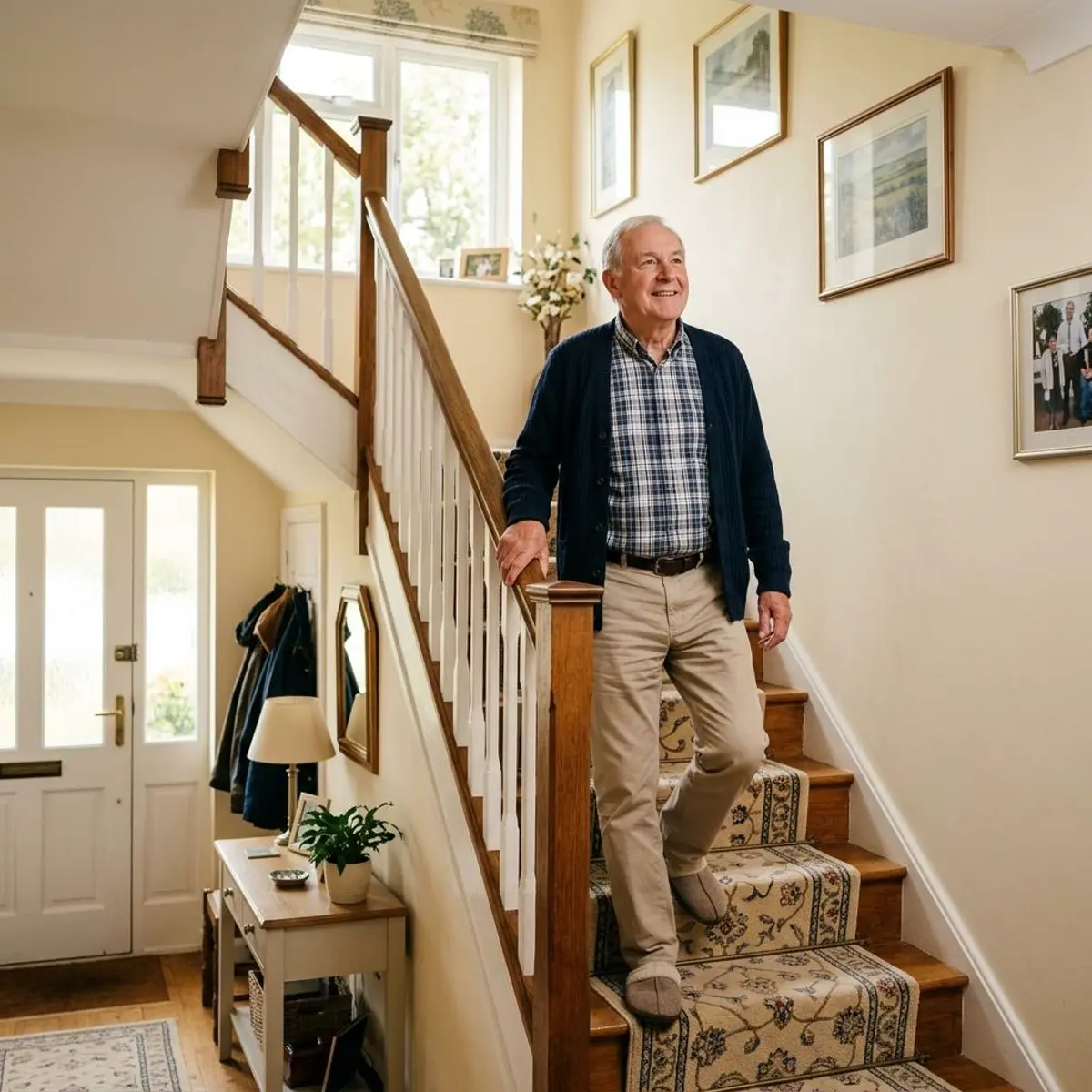
• Handrail improvements. Ensure the handrail runs the full length of the stairs, is secure, and is on at least one side. A second handrail can be added relatively inexpensively. Handrails that stop at the top or bottom of the stairs leave the most dangerous part of the journey unprotected.
• Bath board and bath seat. For those who still use a bath, a bath board (a board that rests across the bath to sit on while lowering the legs in) and a bath seat make getting in and out much safer. You can buy these for around £40 to £60, or the council may provide them.
• Raised toilet seat. Reduces the distance to lower down and rise up. Particularly helpful after hip or knee surgery and for those with arthritis. Available for under £30 and often provided free by the council following an OT assessment.
• Walk-in shower conversion. The most transformative bathroom adaptation for longer-term safety. Replacing a bath with a level-access or walk-in shower eliminates one of the highest-risk activities in the home. May be partly or fully funded through the Disabled Facilities Grant.
• Stairlift. For those where stairs have become difficult or dangerous, a stairlift restores access to the whole house without the need to move to a ground floor bedroom. May be funded through the Disabled Facilities Grant. The decision should follow an OT assessment.
The Disabled Facilities Grant: what it is and how to access it
A mandatory grant for home adaptations: up to £30,000
The Disabled Facilities Grant (DFG) is a mandatory grant from your local council. That means you have a legal right to it if you meet the criteria. It can fund a wide range of adaptations: stairlifts, level-access showers, ramps, grab rails, wider doorways, better bathroom access and more.
The DFG does not affect any benefits you receive. You can apply whether you own or rent your property. Tenants need their landlord's permission, but can still apply.
How to apply:
• Contact your local council adult social care team and ask for a needs assessment and/or a DFG application
• An occupational therapist will visit and assess what adaptations are needed
• The OT recommendation goes to the housing department, who assess the grant amount based on need and a means test
• Once approved, the council works with you on approved contractors. Do not start work before grant approval
• The council has up to six months to process an application, and local wait times vary
For guidance and a self-assessment tool, visit foundations.uk.com, the national body for Home Improvement Agencies. They can also help you through the application process.
The occupational therapist assessment: the gateway to support
An occupational therapist (OT) assessment is the key that unlocks most funded adaptations and equipment. A community OT visits the home, watches how the person moves around it, and recommends what would make it safer, from grab rails to walk-in showers to stairlifts. The assessment is free on the NHS.
OT assessments are underused. Partly this is because people don't know they are entitled to one, and partly because there can be a wait. The best ways to request one are:
• Ask your GP to refer for a community OT assessment, especially if there has been a recent fall, a hospital discharge, or a new mobility problem.
• Contact your local council's adult social care team directly and ask for a care needs assessment. This should automatically include OT input where appropriate.
• After any hospital admission, discharge teams should arrange a home assessment before discharge if there are safety concerns. If this hasn't happened, ask for it before you leave.
Telecare and personal alarms
Telecare is the term for technology that supports safe, independent living at home. At its simplest, it includes pendant or wristband personal alarms. These are pressed if the person falls or feels unwell, and they connect to a 24-hour monitoring centre that can call for help. More advanced systems include fall-detection pendants, smoke and carbon monoxide detectors, door sensors (useful for those with dementia), medication reminder dispensers and bed exit sensors.
Personal alarm services typically cost between £5 and £20 a month. Many local councils offer subsidised services, so ask adult social care. For those who have already had a fall, or who spend a lot of time alone, a personal alarm is often the single most valuable safety addition to the home.
Telecare does not replace human care, and it does not remove hazards. But it gives a safety net that can make the difference between a fall that becomes a crisis and a fall that gets a quick response, especially for those who live alone.
The Abney & Baker approach
Five Pillars of Later Life Health: the complete picture
Our Five Pillars help us look at the whole person, not just one problem. This can help you think about your own wellbeing, or the wellbeing of a parent or loved one. Move (physical health) covers strength, balance, movement and sleep. Think (cognitive health) supports memory, confidence and enjoyable activities. Nourish (nutrition) means eating well and drinking enough. Connect (social and emotional wellbeing) includes company, purpose and how you feel. Live (home safety) means making the home easier and safer to live in.
The home as a place of confidence and independence
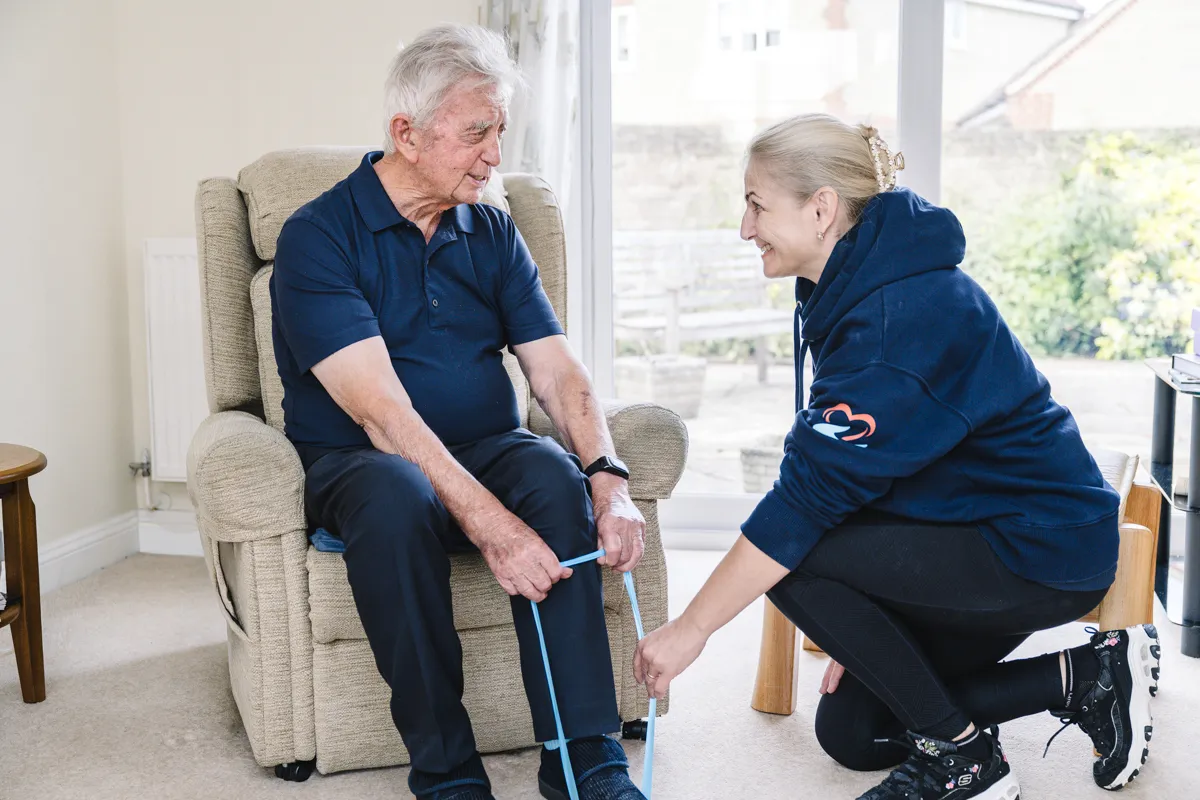
At Abney & Baker, our care is built around a simple belief: people should be able to stay in their own home, living life as fully as possible, for as long as possible. Home safety is not just about removing hazards. It is about creating the conditions in which a person can move around their home with confidence. Our preventative home care is designed to do exactly that.
Our carers are trained to notice potential hazards during regular visits: a rug that has curled at the edge, a bulb that needs replacing, a banister that has become loose. They flag these observations so that action can be taken before a hazard becomes an incident. They also support families in initiating OT assessments and accessing adaptations through the proper channels.
“"He's getting stronger, his balance has improved, and he now walks outside without his sticks. He's even started working in the garden again. Recently he told me he's thinking about starting bowls again."”
The whole series comes together here. Strength protects against falls. Good nutrition keeps bones dense. Sleep affects balance. Social connection means hazards get noticed. A medication review removes avoidable fall risks. And a safe, well-adapted home is the foundation on which all of it rests.
Room-by-room home safety checklist
Use this checklist in your own home, or while helping a parent or loved one. Tick each item that is already in place. Anything left unticked is something you can look at together.
Entrances, hallways and stairs
Bedroom and bathroom
Kitchen and living spaces
Frequently asked questions
How can I make a home safer for an older person?
Start by clearing walkways, improving lighting and securing loose rugs. Check the stairs, bathroom and route from the bed to the toilet first. Our checklist above will help you review one area at a time.
Can I get help to pay for home adaptations?
You may be able to get support from your local council through a Disabled Facilities Grant. Ask the council's adult social care team for an assessment before paying for major work.
When should I ask for an occupational therapist assessment?
Ask for an assessment if you or your loved one has fallen, finds everyday tasks difficult, or no longer feels safe moving around the home. A GP, hospital team or local council can help arrange one.
How can home care support independence?
A regular carer can help with daily routines, notice new risks and support safe movement, meals and medication. The aim is to help you or your loved one stay confident and independent at home.
Eight issues. One belief: people should be able to stay well, independent, and at home for longer.
Falls prevention. Muscle strength. Nutrition and hydration. Cognitive health. Social connection. Sleep. Medication management. And now, home safety. Eight issues, eight practical guides, one consistent purpose: to help people living in Bath, North East Somerset, and West Wiltshire get the information and support they need to live life as fully as possible in the home they love.
If any of these topics has prompted a conversation you need to have, or if you are thinking about care for yourself or someone you love, we would be glad to hear from you.
To make a home safer and keep independence for longer, explore our care at home services and our falls prevention support. You can also get in touch for a friendly, no-obligation chat.
We’re always here if you want to chat about your care options
Speak to a real person about how care at home can help you or your loved one.